Wednesday, June 22, 2022

Dragonflies and Damselflies

It's pretty easy to get these two kinds of insects confused when they are skimming around the lake, much like folks might confuse a moth or butterfly. Right about now, this summer's damselflies and dragonflies are turning up in big numbers on the lake. 

Both types of insects good-sized, often colorful with bright blues and greens. They hang out near the water and warm themselves on plants and rocks. Damselflies tend to be thinner, more delicate than dragonflies. They often land you, your clothes, your hat, your boat, etc; whereas the dragonflies often seem like they can buzz around the air for hours. 

Both dragonflies and damselflies lay eggs in water or in/on aquatic plants. The larvae then live in the water until they are ready to mature as the familiar air-borne insects we see. The larvae or nymphs are an important food source for fish. 

As adults, dragonflies and damselflies are predators eating flies, mosquitos, midges, moths and other flying insects. They continue to spend most of their time near the water, often resting on aquatic plants, making adult dragonflies / damselflies an important food for fish, turtles, frogs and birds like swallows. 

Here are some dragonflies / damselflies you might see around Puckaway:


Dragonfly - Eastern Pond Hawk - Resting on a rock at the shoreline. 


Dragonfly - Halloween Pennant Dragonfly - Resting on a reed


Damselfly - Bluet - we see a ton of these guys


Dragonfly (Blue Dasher) and Damselfly (Bluet) 

Tuesday, June 21, 2022

Terns of Puckaway

Terns, gull-like birds, patrol Lake Puckaway, gliding gracefully above the water, watching for fish below. If you haven't stopped to watch their aerobatics while on the lake, you should.  Wisconsin is home to four species of tern: Forster's Terns, Common Terns, Black terns, and Caspian Terns.

Black Terns are the most different of the group. Breeding black terns are slate gray to black in color; while the other species play on a white and black theme. Caspian terns are the next easiest to pick out of the group, simply based on size. They are much larger than the other terns. The other terns are larger than swallows but smaller than most gulls, while the Caspian Tern is a good-sized bird sporting a wingspan over 4 feet.

The Common Tern and Forster's Tern are most similar in color and size. I find them tricky to distinguish. Tips I've picked up while birding that seem to help include: 1) Look for the primary feathers on the edge of wings when resting, if dark, it's more likely a Common Tern. The Common Tern's beak and feet tend to be a deeper red-orange in color, where as the Forster's Tern is a lighter orange. Forster's are also supposed to have longer legs than a Common Tern. The challenge with using most of these tips, is that they are comparisons between the two species so without them side-by-side they can be tough to distinguish. That leaves us with habitat as a characteristic. Generally Forster's Tern is more associated with freshwater marshes and shallow lakes, while the Common Tern prefers more open waters. Both species are present on Puckaway.

You can spot terns all around the lake, but hotspots include: the tern rafts near the dredge bank (of course), Haystack Point and near the Dead River on the west end, and patrolling around the milfoil mat growing in the western side of the lake. We seem the regularly enough on the North Shore that my children no longer find them exciting. 

I'm reasonably confident that I have spotted all four species of tern on Puckaway. The lake has plenty of small fish for them to catch when they dive head first into the lake with a loud plop! Floating vegetation, piers, the dredge bank, and the tern rafts give them many places to rest. And the rafts support a breeding colony of Common Terns.


Likely Forster's Tern nest on vegetation mat near the dredge bank.


The red-orange beak and feet make me lean Common Tern, the floating vegetation - Forster's. 


Black Tern fishing near Haystack Point.


Large Caspian Tern (also note the black feet) swoops between Pelicans. 

Tuesday, May 31, 2022

Lake Puckaway Comprehensive Management Plan Reflection Ahead of June 4 Annual Meeting

The Lake Puckaway Comprehensive Management Plan published in 2017 asserts the following three goals: 

1. Collect current and historical data

2. Raise overall understanding of the lake

3. Develop a management plan to increase the overall health of the lake


The plan is built on data collected from 2016 and earlier to describe the condition of the lake from that time and before.


The lake is described in the following terms:

1. “hypereutrophic system with high nutrient and algal levels and low water clarity”

2. “Aquatic plant studies conducted in 2015 indicate that the lake is sparsely vegetated…leaving over 80% fo this shallow lake without aquatic plants” 

3. “While invasives, curly-leaf pondweed, brittle naiad, and Eurasian water milfoil were located, neither seems to be in overabundance”


Compelling data was collected and presented primarily in bar graph format with the years spanning the x-axis to illustrate changes over time. As an example, data in bar graphs seem to show that in the 2010’s phosphorus levels trend more toward fair rather than poor level of the earlier 2000’s. The data also described a decrease in lake vegetation over a similar time period, a reduction in vegetation from 2005 - 32% to 19% in 2015. it also notes no statistical difference in occurrence of coontail and milfoil between 2005 and 2015.


The comprehensive plan claims correctly that a diversity of native plants both aquatic and terrestrial would provide various benefits to lake health, such as:

1. “Vegetated shorelands prevent polluted run off from entering lakes by filtering this water or allowing it to slow to the point where particulates settle”

2. “Roots of shoreland plants stabilize the soil thereby preventing shoreland erosion”

3. “Diverse aquatic vegetation provides habitat and food for many kind of aquatic life including fish, insects, amphibians, waterfowl, and even terrestrial life.”

4. “Lakes with diverse aquatic plant communities have higher resilience to environment disturbances and greater resistance to invasion by non native plants….because Lake Puckaway contains a relatively high number of native aquatic plant species, one may assume that the aquatic plant community has species diversity.”


These action items are noted in the plan in order to boost native plant populations, increase water clarity and reduce phosphorus levels:

1. Reconstruction of part of the dredge bank

2. Reconstruction and stabilization of pancake island

3. Construction of new island habitat to be considered

4. “Periodic reductions in the water levels during the growing season”

5. “The management goals should always include the control of invasive species and restoration of native communities through environmentally sensitive and economically feasible methods.”


The expected outcomes include:

1. Increase in native plants, anticipating “the large lotus communities in Lake Puckaway provide a valuable wildlife habitat, stabilize bottom sediments, and reduce non-native plant colonization” and also the establishment of: common arrowhead, common bur-reed, water stargrass, soft stem bulrush.

2. “It is expected that the majority of additional growth would occur in the lake’s eastern basin, leaving much of deeper western basin in an open-water state as it is now”


In doing some digging, I was unable to find the data for phosphorus, chlorophyll-a, and water clarity for years 2017 and later. 

Based on the spread of milfoil from Haystack Point out towards the area south of the Log Cabin, the general description of lake presented in the comprehensive plan is no longer accurate. Anecdotally, in monitoring our own shoreline, terrestrial plants near the water are dominated by invasive plants like mullein, common reed, purple loosestrife and reed canary grass, as well as plants that deer won’t eat like stinging nettle.


It is worth noting that one practice described in the plan to control invasive plants is drawdown. It is described as common in temperate places and likely occur in the winter.The plan notes that “this technique to control aquatic plants, should not be confused with water level management to enhance the aquaitc plant community of a lake as they are two different actions and have substantially different requirements for success.” And notes some significant disadvantages: “potential to upset the lake ecosystem and have significant impacts on fish and other wildlife, adjacent wetlands may be altered due to lower water levels, may enhance the spread of certain undesirable species like common reed and reed canary grass.” 


Here are my open questions to consider in regards to how the state of the lake may have changed since 2016:

1. Is a lack of aquatic vegetation in the lake still a primary concern?

2. How have the numbers for phosphorus, chlorophyll-a, and water clarity changed since 2016? 

3. As it no long appears accurate to state that there is not an abundance of hybrid milfoil, do we need vegetation survey data to understand the lake’s present state?

4. What exactly is the difference between a drawdown intended to reduce invasive plants vs a drawdown to enhance the plant community? (In other words will a growing season drawdown increase the abundance hybrid milfoil?)

5. If the previous objectives have been met (ie lowering phosphous levels and improving water clarity), what new objectives and plans do we make in order to acheive them?


As a native plant gardener, I concur with the plan’;s assessment that a diversity of native plants bring significant benefits, having tracked increased bird and pollinator diversity in my yard over a 10 year period as I increased the plant diversity.

However, it’s also worth noting that when it comes to aquatic vegetation, aquatic native plants are less accessible than terrestrial native plans and needing DNR approval is also a hurdle preventing interested parties from participating. 

In my yard if I had simply left bare earth, it would have been consumed by Ground Ivy, Dandelion, Chicory, and Burdock. The process of actively planting native plants while weeding out the invasive is of great importance and builds resilience as the planted natives are able to seed themselves. My assumption is that many of the lake stakeholders (hunters, fishermen, birders, property owners) care about the health of the lake and want to see strong and stable fish and bird populations. I also suspect that many can appreciate the aesthetics of lotus, water lily, broadleaf cattail, swamp milkweed, and blue flag iris. However it is unclear how we go from today’s state which appears to be a shallow lake with clear water, heavily vegetated with milfoil to a clear, shallow lake supporting a diversity of native plant and animal species.  


Wednesday, May 18, 2022

Migratory Bird Day Highlights - May 14 2022

Last Saturday was the spring Global Big Day and Migratory Bird Day It lines up well with peak spring migration, meaning folks out looking for birds were likely to see waterfowl, shorebirds, warblers, flycatcher and others moving through on their way to Canada or actively working on nests.

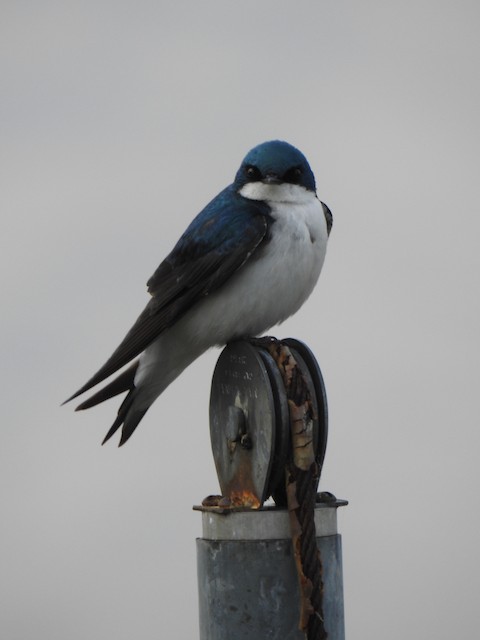
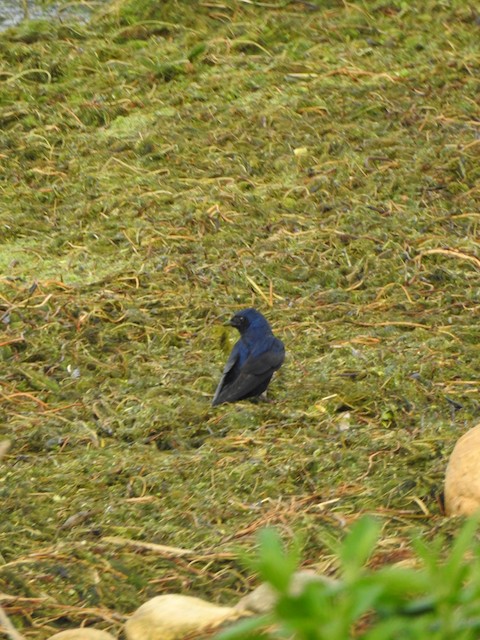
My adventures around Puckaway provided many sights and sounds of local birds and migratory birds. Right now, along the Northshore a number of cabins and homes have houes up and they are filling with Purple Martins and Tree Swallows. We have a pair of Swallows nesting in a bird house we put up, and they were the first birds I saw when stepped out at 5:30 am.


And the purple martins were picking up dislodged milfoil along the short to use as nesting materials.


Both birds are excellent insectivores, catching bugs in flight eating: flies, damselflies, bees, ants, wasps, mayflies, moths, butterflies, cicadas, and termites. Tree Swallows typically operate lower to the ground or in Puckaway's case closer to the surface of the water and the martins will catch bugs at a higher elevation. Both are handy to have around to help keep the bugs in check.

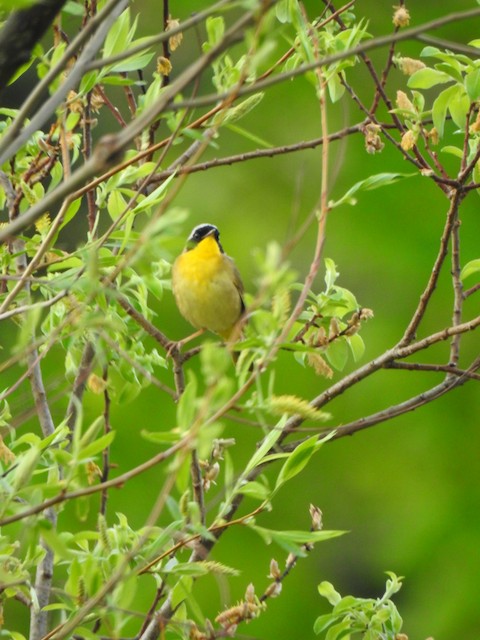
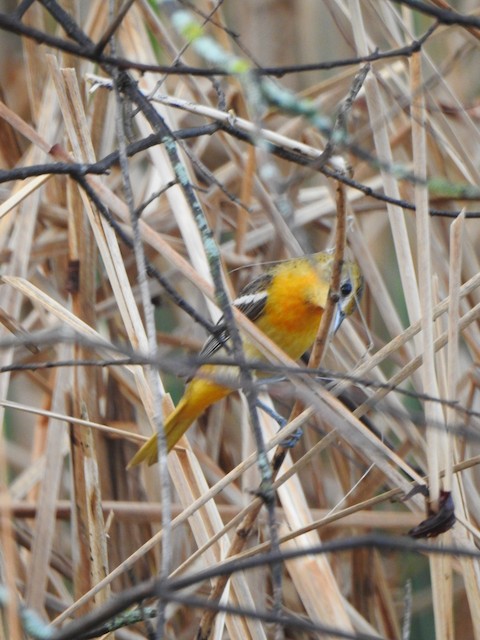
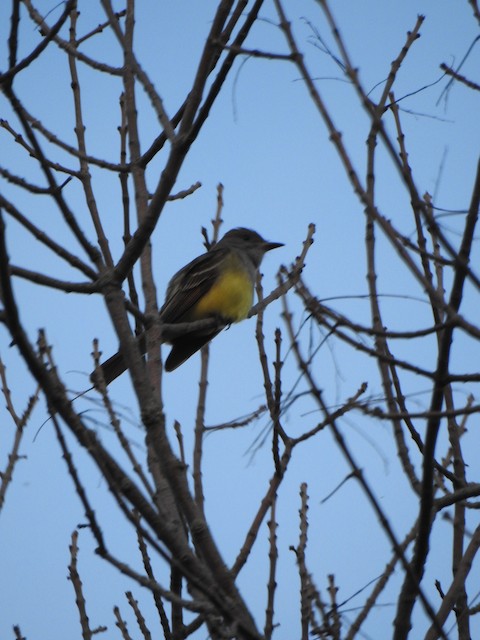
Other highlights from the day included a number of colorful friends like a Common Yellowthroat, a female Baltimore Oriole, and a Great Crested Flycatcher.


Common Yellowthroat - singing his heart out


Baltimore Oriole - gathering nesting material


Great Crest Flycatcher - perched while hawking insects

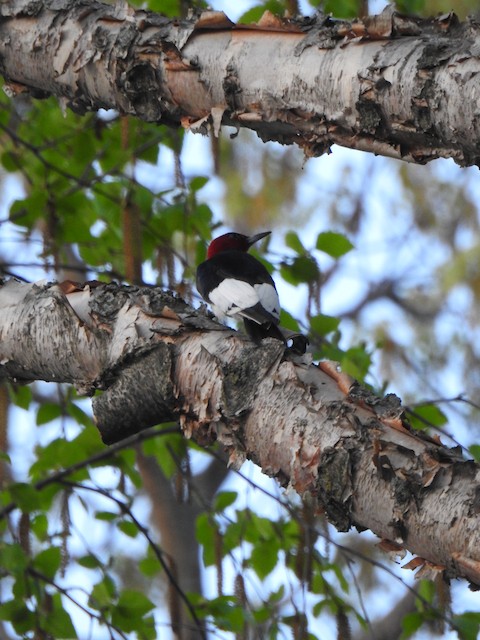
I saw lots of other great birds, many of the usual suspects: Mallards, Canada Geese, Wood Ducks, American White Pelicans, and Double Crest Cormorants. The day proved that Puckaway doesn't just suport life on or in the lake but life all around the lake. I counted 67 total species that day, 48 were found along the Northshore of the lake. The last bird I got a picture of was a Red Headed Woodpecker who came to perch in a River Birch just above our cabin.


Red Headed Woodpecker

Sunday, May 1, 2022

Mike and Cathy's Good Old Days - Friday Night Fish Fry

If you are on the North Shore on a Friday, and you are feeling hungry, consider making a stop at Mike and Cathys Good Old Days. The all you can eat Fish Fry is delicious. We went this past Friday with our two picky eaters. One of whom said the cod was delicous, and the other ate her cod. The adults did the most damage, digging into the cod, broasted chicken and potato wedges. All good. The meal also came with plenty of tartar sauce, coleslaw, German potato salad, and baked beans. We also ordered fries for the kids. Our group of four needed two doggy bags and brought back some wedgss, fries, most of the chicken, and two pieces of cod. Not only was everyone full and happy; we had lunch ready to go for the next day, and here's the best part: two kids, two adults for about $45.